Educational familiarization only. This is original TechOpsBase learning content. It does not reproduce Airbus pages, diagrams, procedures, maintenance-task instructions, numerical limits or controlled data. Actual aircraft work requires current approved data, correct aircraft effectivity, operator procedures, authorization, safety precautions and supervision.
Resource profile
- Aircraft: Airbus A350 family
- ATA chapter: 26 - Fire Protection
- Audience: Aviation enthusiasts, students, junior technicians and experienced maintainers
- Level: Intermediate system familiarization with maintenance reasoning
- Source basis: Privately supplied legacy manufacturer training and MSG-3 analysis
- Publication status: Draft pending technical review
Learning objectives
- Explain rapid knockdown and sustained suppression.
- Describe the high-rate and flow-metered bottle functions.
- Trace agent routing through the diverter valve.
- Explain FEDC command and monitoring.
- Apply cargo-extinguishing fault reasoning.
1. Extinguishing strategy
A cargo fire can remain hidden behind liners and cargo for a long period. The extinguishing system must attack the event quickly and then maintain an effective agent concentration until the aircraft can land. One rapid bottle alone may not provide enough duration for an extended diversion.
The system uses two discharge profiles. Bottle 1 is high rate and releases agent rapidly into the selected compartment. Bottle 2 is flow metered and releases agent slowly through the Flow Metering Equipment.
The architecture is designed to suppress rather than provide visual proof that the fire is out. Smoke indications can persist, and crew actions remain controlled by approved procedures.

2. Bottles, FME and diverter
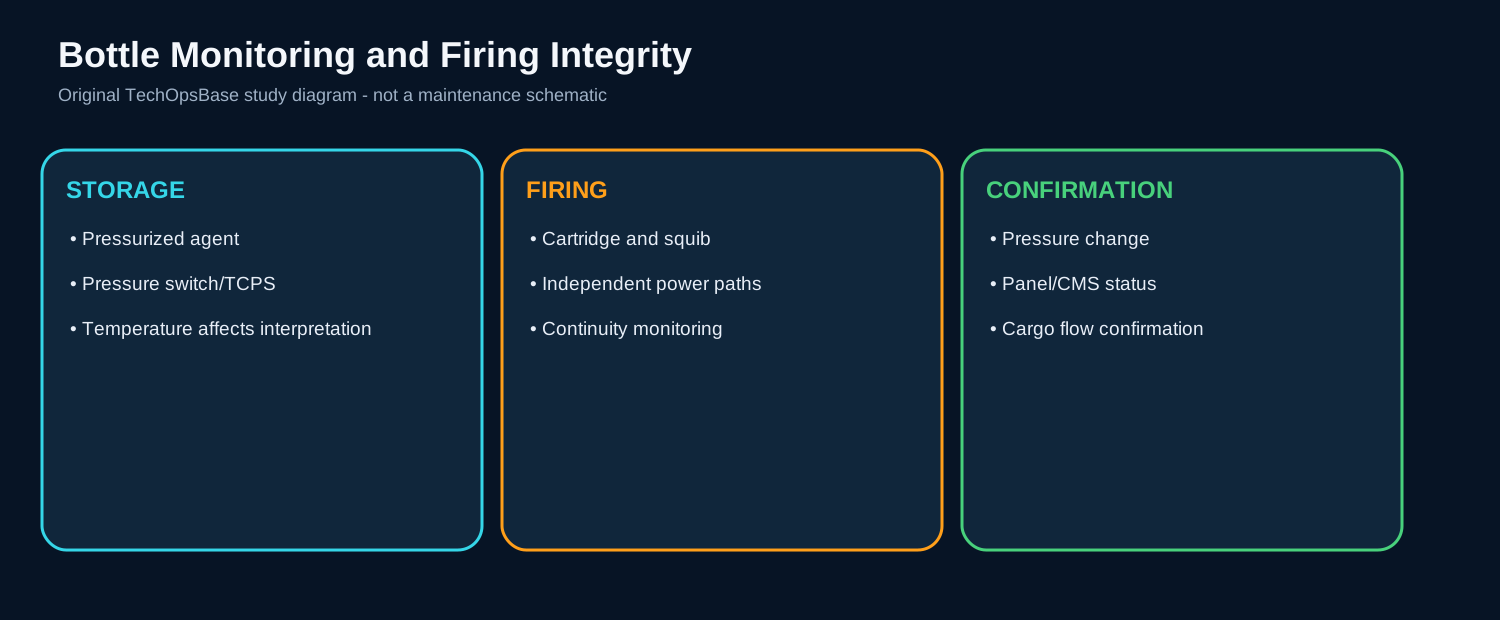
The high-rate bottle produces the initial concentration. An electrically fired cartridge ruptures the discharge path. Bottle-pressure monitoring provides discharge or low-pressure state and squib continuity is monitored before use.
Bottle 2 sustains concentration. The FME restricts and controls outflow rather than allowing the bottle to empty immediately. A low-pressure indication and confirmed metered-flow process are different evidence.
A single installation serves either the forward or the aft/bulk cargo system. The diverter valve routes agent to the selected distribution pipe. Incorrect diverter position or cartridge failure can allow discharge without correct routing.
3. FEDC and CIDS integration
Two Fire Extinguishing Data Converters command bottle and diverter squibs and act as remote data concentrators. They monitor bottle pressure, squib continuity and the flow-metered discharge process.
The CIDS/SDF interfaces the FEDCs with CMS and cockpit indications. BTL 1 and BTL 2 indications show bottle state; the flow-metered bottle indication can appear later because discharge is intentionally slow.
A panel-indication failure must be separated from an actual discharge failure by reviewing FEDC data, pressure switches, squib states and physical bottle condition.


4. Handling and fault scenarios
Cargo bottles are heavy pressurized components and require approved lifting or handling equipment. The discharge heads contain energetic cartridges. The system must be electrically and mechanically made safe before removal.
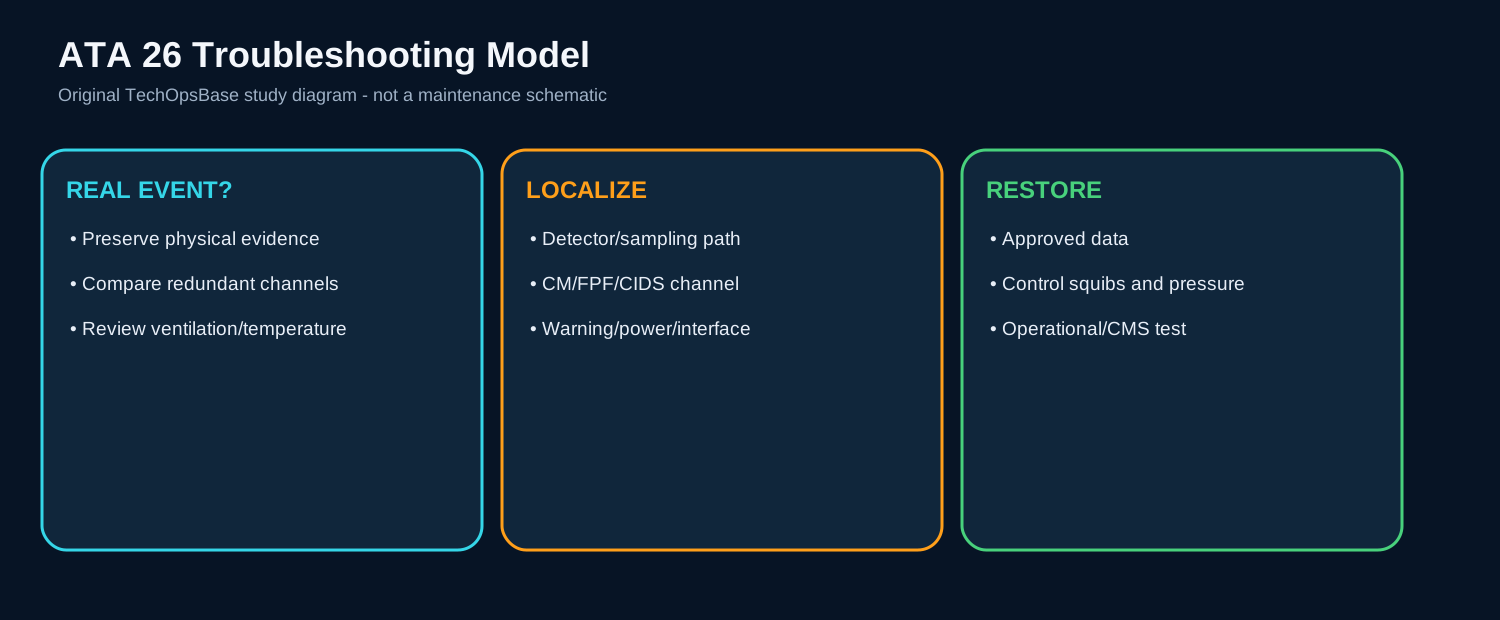
If the smoke warning is valid but DISCH indication does not appear, investigate command, FEDC, squib continuity and power. If bottle 1 shows discharged but bottle 2 does not transition as expected, review elapsed time, FME monitoring and flow path.
After a real discharge, preserve event data and determine which bottle and diverter circuits fired. Replace or restore all discharged and controlled components using approved procedures.

Maintenance boundary
This resource teaches system architecture and fault reasoning. It deliberately excludes cartridge handling, squib isolation steps, bottle removal procedures, discharge tests, detector acceptance limits, resistance values, agent quantities, warning-reset procedures and dispatch decisions. Fire bottles, cartridges, squibs, hot-battery circuits and pressurized agent are hazardous. Use the current approved AMM, TSM, wiring data, safety procedures and aircraft effectivity before performing aircraft work.
Review prompts
- Which zone is being protected, and is the hazard fire, overheat or smoke?
- What sensing technology is used in that zone?
- Which independent channels must agree before a warning is confirmed?
- Which computing function converts, validates and distributes the signal?
- What automatic isolation or shutdown follows the warning?
- Is extinguishing automatic, manual, or not installed for that zone?
- Which test proves the detector path, warning path and firing-circuit monitoring?
- What hazardous stored energy remains during maintenance?