Educational familiarization only. This original TechOpsBase resource explains system purpose, architecture and maintenance reasoning. It does not reproduce Airbus pages, diagrams, task instructions or controlled maintenance data. Actual aircraft work requires current approved data, correct effectivity, operator procedures, authorization and supervision.
Resource profile
- Aircraft: Airbus A350 family
- ATA chapter: 27 - Flight Controls
- Audience: Students, junior technicians and working professionals
- Level: Intermediate familiarization
- Source basis: Privately supplied 2013-2014 manufacturer training and MSG-3 material
- Technical status: Draft pending technical review
Learning objectives
- Trace pitch control from side stick to elevators and THS.
- Explain short-term elevator and long-term stabilizer roles.
- Describe actuator damping and EHA backup.
- Identify runaway, freeplay and feedback concerns.
1. Pitch-control division
Elevators provide rapid pitch response. The THS changes the stabilizer incidence to remove long-term elevator load and maintain trim. Control laws coordinate both so the pilot normally commands aircraft response rather than a fixed surface angle.

Maintenance questions to ask
- What is the commanded condition and what independent evidence confirms it?
- Which computer, sensor, hydraulic and electrical channels are required in this configuration?
- Is the failure crew-evident, maintenance-evident or hidden until a dedicated test?
- Which current approved document and effectivity control the next action?
2. Elevator actuation
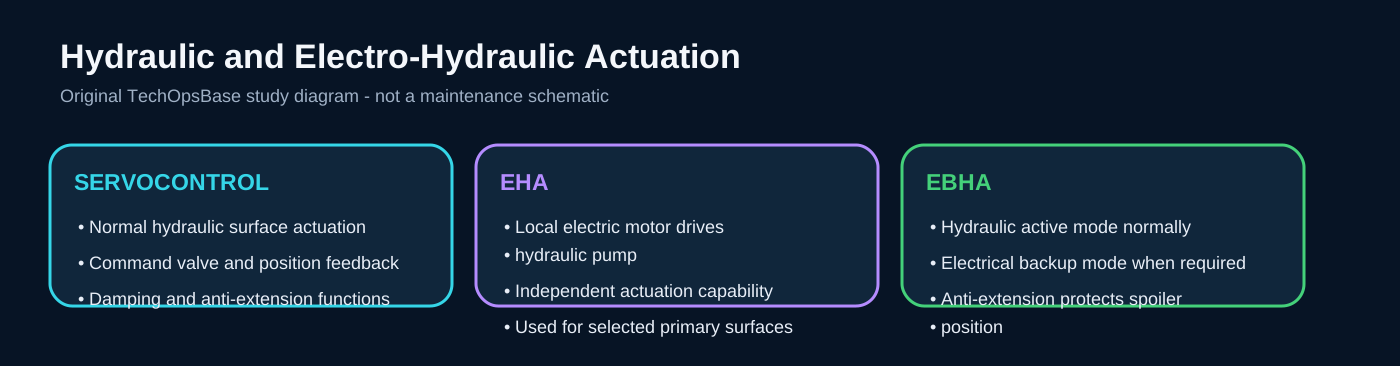
Left and right elevators use distributed actuation with hydraulic servocontrols and electro-hydrostatic support. Multiple channels prevent a single hydraulic or electrical failure from removing pitch control. Transducer units provide surface position for servoing and monitoring.
Maintenance questions to ask
- What is the commanded condition and what independent evidence confirms it?
- Which computer, sensor, hydraulic and electrical channels are required in this configuration?
- Is the failure crew-evident, maintenance-evident or hidden until a dedicated test?
- Which current approved document and effectivity control the next action?
3. Damping modes
An inactive actuator must restrain the surface without fighting the active actuator. Hard and soft damping concepts manage this behavior according to system state. Some damping-selection degradations can be hidden and are therefore addressed by monitoring or scheduled maintenance rather than crew handling alone.

Maintenance questions to ask
- What is the commanded condition and what independent evidence confirms it?
- Which computer, sensor, hydraulic and electrical channels are required in this configuration?
- Is the failure crew-evident, maintenance-evident or hidden until a dedicated test?
- Which current approved document and effectivity control the next action?
4. THS actuation
The THS provides automatic and manual pitch trim. Multiple drive and control paths, position sensing, braking and load monitoring protect against loss of drive, runaway or incorrect position. In degraded law, the crew may be required to use manual trim.

Maintenance questions to ask
- What is the commanded condition and what independent evidence confirms it?
- Which computer, sensor, hydraulic and electrical channels are required in this configuration?
- Is the failure crew-evident, maintenance-evident or hidden until a dedicated test?
- Which current approved document and effectivity control the next action?
5. Aeroelastic and structural awareness
Freeplay, attachment wear and actuator stiffness can influence vibration and load. The MSG-3 material distinguishes conditions that are crew-evident from hidden degradation. Maintenance must use current limits for freeplay, backlash, leakage and attachment condition.
Maintenance questions to ask
- What is the commanded condition and what independent evidence confirms it?
- Which computer, sensor, hydraulic and electrical channels are required in this configuration?
- Is the failure crew-evident, maintenance-evident or hidden until a dedicated test?
- Which current approved document and effectivity control the next action?
6. Troubleshooting
Separate an incorrect aircraft response from an incorrect indication. Compare elevator and THS commands, actual positions, hydraulic/electrical availability and computer status. Confirm whether the issue follows one actuator, one surface or the common pitch-law inputs. Establish a safe surface-support and hydraulic configuration before inspection.
Maintenance questions to ask
- What is the commanded condition and what independent evidence confirms it?
- Which computer, sensor, hydraulic and electrical channels are required in this configuration?
- Is the failure crew-evident, maintenance-evident or hidden until a dedicated test?
- Which current approved document and effectivity control the next action?
Integrated review
Use the input ? computation ? power ? actuation ? feedback ? indication model. A correct diagnosis must explain both the physical symptom and every associated message. Avoid replacing a computer merely because it generated the warning; it may be reporting loss of an external input, power source or actuator response.
Key takeaways
- Trace pitch control from side stick to elevators and THS.
- Explain short-term elevator and long-term stabilizer roles.
- Describe actuator damping and EHA backup.
- Identify runaway, freeplay and feedback concerns.
Current approved maintenance data always controls aircraft work.