Educational familiarization only. This original TechOpsBase resource explains system purpose, architecture and maintenance reasoning. It does not reproduce Airbus pages, diagrams, task instructions or controlled maintenance data. Actual aircraft work requires current approved data, correct effectivity, operator procedures, authorization and supervision.
Resource profile
- Aircraft: Airbus A350 family
- ATA chapter: 27 - Flight Controls
- Audience: Students, junior technicians and working professionals
- Level: Intermediate familiarization
- Source basis: Privately supplied 2013-2014 manufacturer training and MSG-3 material
- Technical status: Draft pending technical review
Learning objectives
- Distinguish servocontrol, EHA and EBHA.
- Explain active, damping and anti-extension states.
- Connect actuator modes to hydraulic and electrical availability.
- Recognize hidden backup degradation.
1. Hydraulic servocontrols
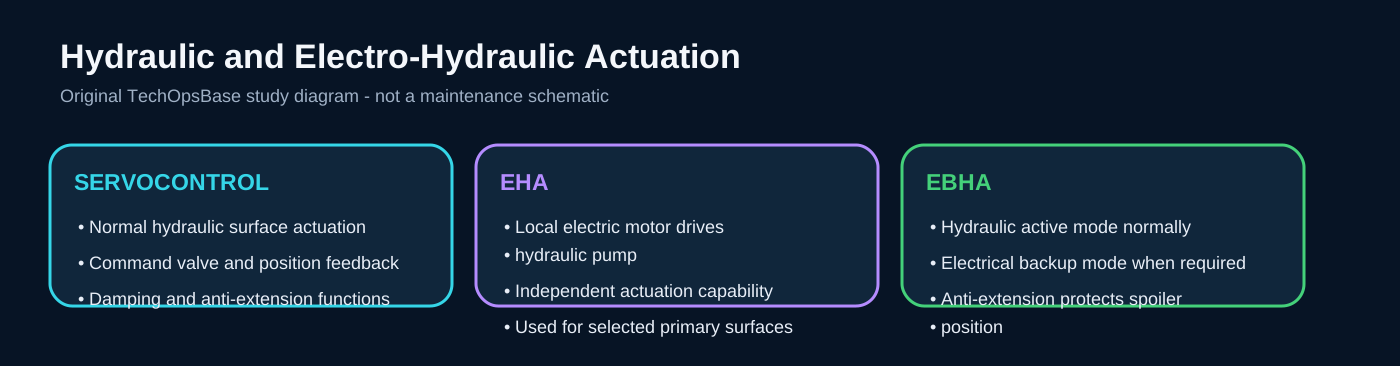
A conventional servocontrol converts an electrical command into hydraulic flow and surface force. Position feedback closes the control loop. When not active, the actuator must provide the intended damping or restraint so it does not oppose the active channel or allow uncontrolled surface motion.
Maintenance questions to ask
- What is the commanded condition and what independent evidence confirms it?
- Which computer, sensor, hydraulic and electrical channels are required in this configuration?
- Is the failure crew-evident, maintenance-evident or hidden until a dedicated test?
- Which current approved document and effectivity control the next action?
2. Electro-hydrostatic actuators
An EHA contains a local electric motor and hydraulic pump. It can move a surface without relying on the main aircraft hydraulic circuit assigned to a conventional servocontrol. Local hydraulic power creates another independent actuation path but adds electrical power, motor-control, temperature and internal-fluid considerations.

Maintenance questions to ask
- What is the commanded condition and what independent evidence confirms it?
- Which computer, sensor, hydraulic and electrical channels are required in this configuration?
- Is the failure crew-evident, maintenance-evident or hidden until a dedicated test?
- Which current approved document and effectivity control the next action?
3. Electrical backup hydraulic actuators
An EBHA can operate as a normal hydraulically supplied actuator and switch to an electrically generated hydraulic mode when required. On spoilers it can also use anti-extension behavior to prevent aerodynamic loads from raising an unpowered panel.

Maintenance questions to ask
- What is the commanded condition and what independent evidence confirms it?
- Which computer, sensor, hydraulic and electrical channels are required in this configuration?
- Is the failure crew-evident, maintenance-evident or hidden until a dedicated test?
- Which current approved document and effectivity control the next action?
4. Damping and restraint
An actuator that is not servoing still influences surface dynamics. Hard or soft damping, bypass and anti-extension states are selected according to the function and failure condition. Incorrect selection can be hidden in normal operation and therefore requires monitoring or testing.
Maintenance questions to ask
- What is the commanded condition and what independent evidence confirms it?
- Which computer, sensor, hydraulic and electrical channels are required in this configuration?
- Is the failure crew-evident, maintenance-evident or hidden until a dedicated test?
- Which current approved document and effectivity control the next action?
5. Distributed redundancy
Redundancy is created by mixing hydraulic systems, electrical buses, computers and actuator technologies across surfaces. The correct question is not simply how many actuators exist, but whether the remaining command, power, feedback and restraint paths are independent.
Maintenance questions to ask
- What is the commanded condition and what independent evidence confirms it?
- Which computer, sensor, hydraulic and electrical channels are required in this configuration?
- Is the failure crew-evident, maintenance-evident or hidden until a dedicated test?
- Which current approved document and effectivity control the next action?
6. Maintenance awareness
Treat electro-hydraulic actuators as both hydraulic and electrical equipment. Confirm pressure, isolation and electrical discharge requirements. Use the approved procedure for fluid, bleeding, electrical tests, rigging and actuator replacement. Backup availability cannot be proven from a normal hydraulic movement alone.
Maintenance questions to ask
- What is the commanded condition and what independent evidence confirms it?
- Which computer, sensor, hydraulic and electrical channels are required in this configuration?
- Is the failure crew-evident, maintenance-evident or hidden until a dedicated test?
- Which current approved document and effectivity control the next action?
Integrated review
Use the input ? computation ? power ? actuation ? feedback ? indication model. A correct diagnosis must explain both the physical symptom and every associated message. Avoid replacing a computer merely because it generated the warning; it may be reporting loss of an external input, power source or actuator response.
Key takeaways
- Distinguish servocontrol, EHA and EBHA.
- Explain active, damping and anti-extension states.
- Connect actuator modes to hydraulic and electrical availability.
- Recognize hidden backup degradation.
Current approved maintenance data always controls aircraft work.