Educational familiarization only. This original TechOpsBase resource explains system purpose, architecture and maintenance reasoning. It does not reproduce Airbus pages, diagrams, task instructions or controlled maintenance data. Actual aircraft work requires current approved data, correct effectivity, operator procedures, authorization and supervision.
Resource profile
- Aircraft: Airbus A350 family
- ATA chapter: 27 - Flight Controls
- Audience: Students, junior technicians and working professionals
- Level: Intermediate familiarization
- Source basis: Privately supplied 2013-2014 manufacturer training and MSG-3 material
- Technical status: Draft pending technical review
Learning objectives
- Identify PFCS inputs and computer roles.
- Distinguish PRIM, SEC and BCM capabilities.
- Explain data monitoring and law reconfiguration.
- Trace interfaces to aircraft systems.
1. Inputs and data acquisition
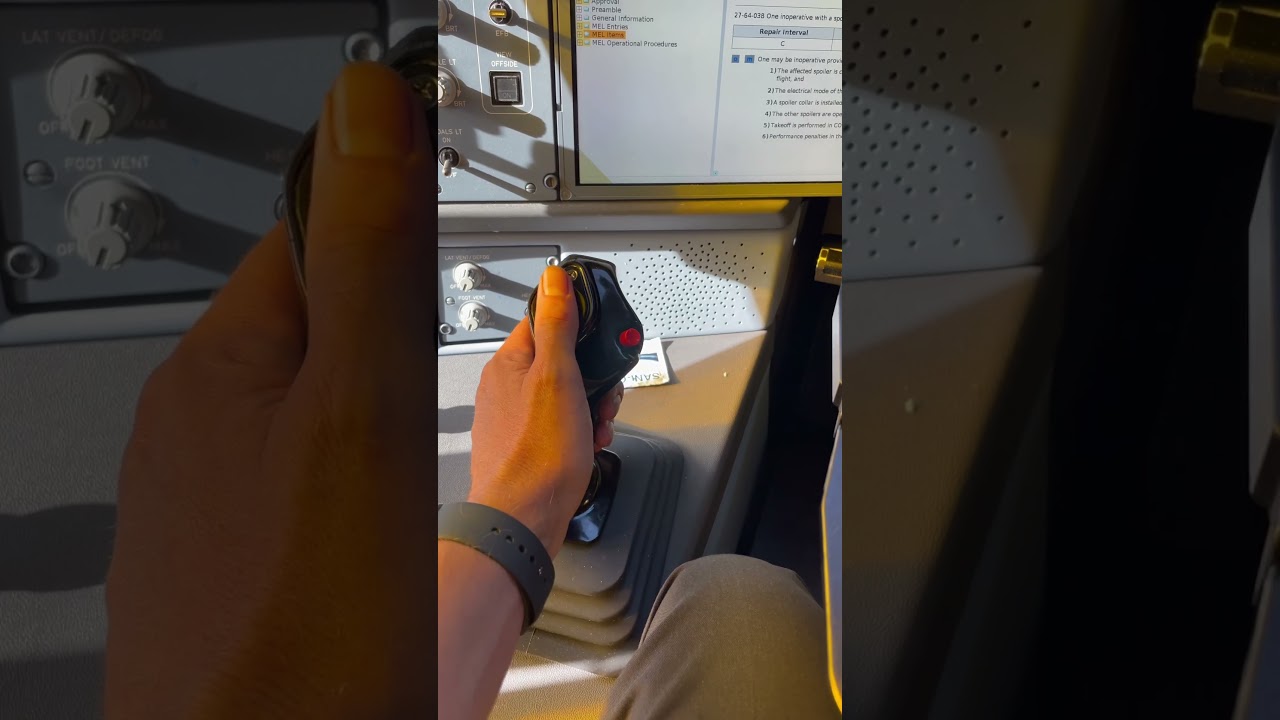
The PFCS receives manual orders from two side sticks, interconnected rudder pedals, trim controls and the speed-brake lever. Autopilot commands arrive from ATA 22. Surface-position transducers, pedal and stick sensors, rate gyrometers, accelerometers, ADIRS data and radio-altimeter information allow the computers to calculate control laws and verify response. Redundant acquisition is valuable only when the computers can compare, reject and reconfigure after disagreement.

Maintenance questions to ask
- What is the commanded condition and what independent evidence confirms it?
- Which computer, sensor, hydraulic and electrical channels are required in this configuration?
- Is the failure crew-evident, maintenance-evident or hidden until a dedicated test?
- Which current approved document and effectivity control the next action?
2. PRIM responsibilities
Each PRIM can compute normal, alternate, abnormal and direct laws, perform surface servoing and receive autoflight commands. PRIM functions include pitch and lateral control, load-factor management, manoeuvre and gust load alleviation, sideslip targets, speed-brake and ground-spoiler logic, and high-lift-related optimization such as aileron or spoiler droop. The three-computer arrangement provides both command and monitoring diversity.

Maintenance questions to ask
- What is the commanded condition and what independent evidence confirms it?
- Which computer, sensor, hydraulic and electrical channels are required in this configuration?
- Is the failure crew-evident, maintenance-evident or hidden until a dedicated test?
- Which current approved document and effectivity control the next action?
3. SEC responsibilities
The SECs provide independent surface-control capability and contain direct and abnormal-law functions. They participate in speed-brake and ground-spoiler functions and maintain essential control after loss or isolation of PRIM capability. Their role is not simply standby; they are active participants in a distributed architecture.

Maintenance questions to ask
- What is the commanded condition and what independent evidence confirms it?
- Which computer, sensor, hydraulic and electrical channels are required in this configuration?
- Is the failure crew-evident, maintenance-evident or hidden until a dedicated test?
- Which current approved document and effectivity control the next action?
4. Back-up control
The BCM and back-up power supply provide a specific final control path. The purpose is not to reproduce all normal-law features but to retain essential control when the normal computer and power architecture is severely degraded. This distinction explains why back-up control has its own inputs, power assumptions and limited law set.
Maintenance questions to ask
- What is the commanded condition and what independent evidence confirms it?
- Which computer, sensor, hydraulic and electrical channels are required in this configuration?
- Is the failure crew-evident, maintenance-evident or hidden until a dedicated test?
- Which current approved document and effectivity control the next action?
5. Data validity and reconfiguration
Computers compare redundant sensor inputs and their own acquisitions. A disagree can cause one source to be rejected by one or more computers. Remaining valid data determine whether normal-law objectives can be maintained. The resulting warning is evidence of the reconfiguration, but troubleshooting must still determine whether the cause is the sensor, wiring, data interface, power or receiving computer.
Maintenance questions to ask
- What is the commanded condition and what independent evidence confirms it?
- Which computer, sensor, hydraulic and electrical channels are required in this configuration?
- Is the failure crew-evident, maintenance-evident or hidden until a dedicated test?
- Which current approved document and effectivity control the next action?
6. Interfaces
PFCS exchanges information with autoflight, hydraulic and electrical systems, fuel quantity, warning, recording, landing gear, air data, maintenance and propulsion systems. A flight-control message can therefore originate outside ATA 27. Technicians should use interface knowledge to avoid replacing an ATA 27 unit when the unavailable prerequisite belongs to another chapter.
Maintenance questions to ask
- What is the commanded condition and what independent evidence confirms it?
- Which computer, sensor, hydraulic and electrical channels are required in this configuration?
- Is the failure crew-evident, maintenance-evident or hidden until a dedicated test?
- Which current approved document and effectivity control the next action?
Integrated review
Use the input ? computation ? power ? actuation ? feedback ? indication model. A correct diagnosis must explain both the physical symptom and every associated message. Avoid replacing a computer merely because it generated the warning; it may be reporting loss of an external input, power source or actuator response.
Key takeaways
- Identify PFCS inputs and computer roles.
- Distinguish PRIM, SEC and BCM capabilities.
- Explain data monitoring and law reconfiguration.
- Trace interfaces to aircraft systems.
Current approved maintenance data always controls aircraft work.