Educational familiarization only. This TechOpsBase resource is an original learning transformation grounded in a privately supplied B737 MAX ATA 31 source. It does not reproduce manufacturer task steps, limits, figures or controlled maintenance instructions. Current approved data and aircraft effectivity control real work.
What this resource teaches
Use MDS self-test/configuration information as structured evidence, not as a replacement for approved troubleshooting.
The MDS index groups functional status
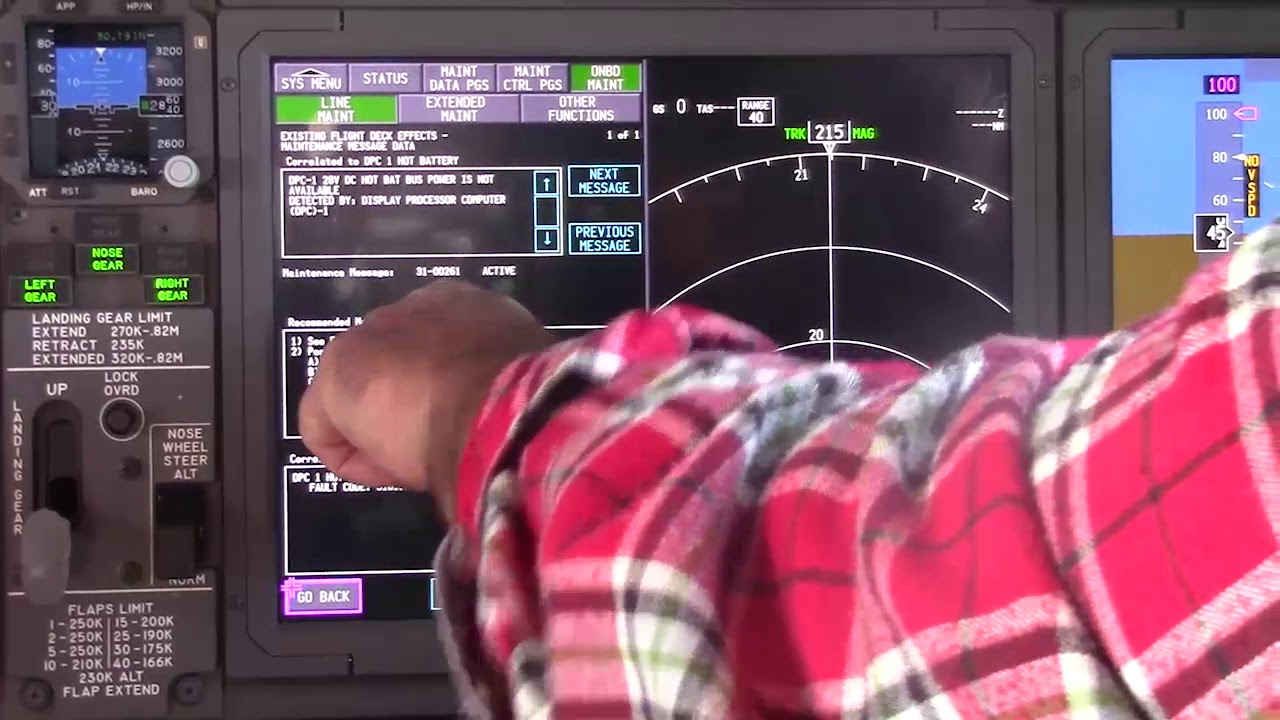
The source lists brightness, displays, DPC digital inputs, DPC discrete/power inputs, DPC discrete outputs, EFIS control-panel test and MDS configuration as status areas.
NORMAL and FAULT describe the observed function
A NORMAL indication is evidence that the tested function sees no fault at that moment. A FAULT status points toward a defined functional area that can be opened for more detail.
CONFIG is a different problem class
Configuration status can relate to software part numbers/options rather than a hard electrical failure. That distinction prevents replacing hardware when the issue is configuration/software.
ONS relationship
The chapter references software loading/download via the Onboard Network System (ATA 46). That is a strong example of modern avionics maintenance crossing traditional ATA boundaries.
Approved-data handoff
Once MDS data identifies the affected LRU/interface/configuration area, the IFIM/WDM/software-loading procedure becomes controlling.
Put this topic into the wider system
Software/configuration is a real failure class
Modern display systems are software-configured. A CONFIG state, wrong loadable software or incompatible option can create a functional issue without a physically failed LRU. This is why configuration evidence should be checked before hardware assumptions become expensive.
ATA 31 is an observation hub
Maintenance pages can expose data from other ATA systems. That makes ATA 31 a place to collect evidence, not automatically the source of every message shown on the screen. Fault isolation usually returns to the originating ATA or interface.
Deeper system reasoning
MDS is both presentation and maintenance infrastructure
The MAX Display System includes display processing computers, display units, control panels and loadable software. It presents operational information, but it also hosts maintenance functions. That dual role matters: a message shown on MDS may originate in another ATA system, while an MDS fault can itself affect how otherwise-good source data is presented. The first split is therefore source data versus display/processing/presentation.
Technician evidence matrix
Record which display/presentation is affected, whether source data is wrong elsewhere, DPC/DU/configuration status, REAL versus snapshot evidence and relevant maintenance messages.
Before using a maintenance message as a conclusion, note what independent evidence agrees with it and what evidence does not. If an alternate source, channel or display changes the symptom, record that explicitly because it can separate a common path from a source-specific path. Preserve configuration and event conditions in the handover so the next technician does not have to rebuild the diagnostic context from memory.
Evidence-first study method
For any system complaint, separate source/input, control logic, physical response, sensing/indication and consumer/result. When two layers disagree, that disagreement is useful evidence. Do not turn that evidence into a maintenance action until the applicable approved fault-isolation or maintenance data is open.
Approved-data boundary
Educational system explanation only. Do not use this page to perform maintenance, operate aircraft systems, isolate components or determine dispatch status. Current approved maintenance data, aircraft effectivity and operator procedures control real aircraft work.