Educational familiarization only. This original TechOpsBase lesson explains system architecture, operating logic and maintenance reasoning. It does not reproduce Airbus pages, illustrations, task steps, limits or controlled maintenance data. Current approved data, aircraft effectivity, operator procedures and authorization always control actual aircraft work.
Resource profile
- Aircraft: Airbus A350 family
- ATA: 21 — Air Conditioning
- Level: Intermediate to advanced familiarization
- Audience: Students, junior technicians and working professionals
- Technical status: Draft pending technical review
- Source treatment: Original educational content derived from privately supplied legacy training material; no source PDF is redistributed
Learning objectives
- Build a clear mental model of the complete system.
- Trace commands, airflow, heat transfer and feedback.
- Recognize normal, degraded and protective configurations.
- Separate source, control, mechanical and indication faults.
- Apply safe maintenance reasoning without replacing approved data.
1. Cooling requirement
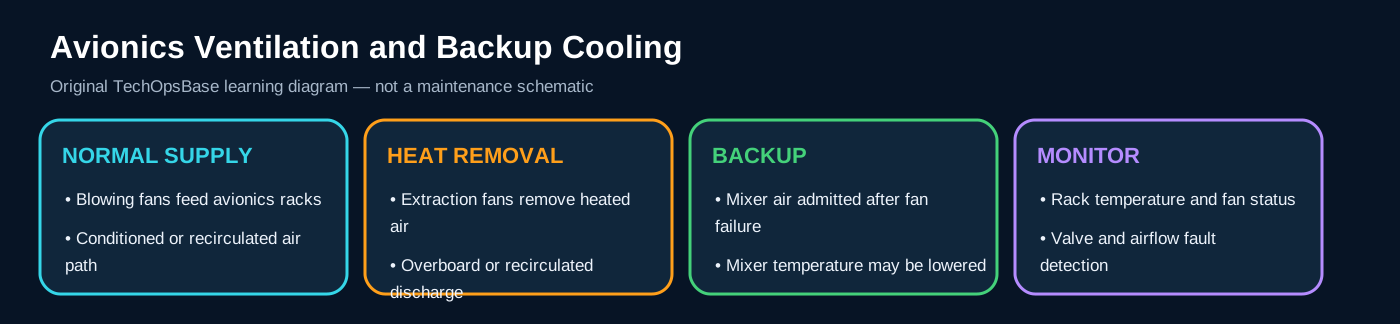
Avionics equipment requires continuous heat removal on ground and in flight.
From a maintenance perspective, the useful question is not only whether the function is available, but whether the command, physical response and feedback agree. Configuration and effectivity must be confirmed before comparing the aircraft with training material.
2. Blowing fans
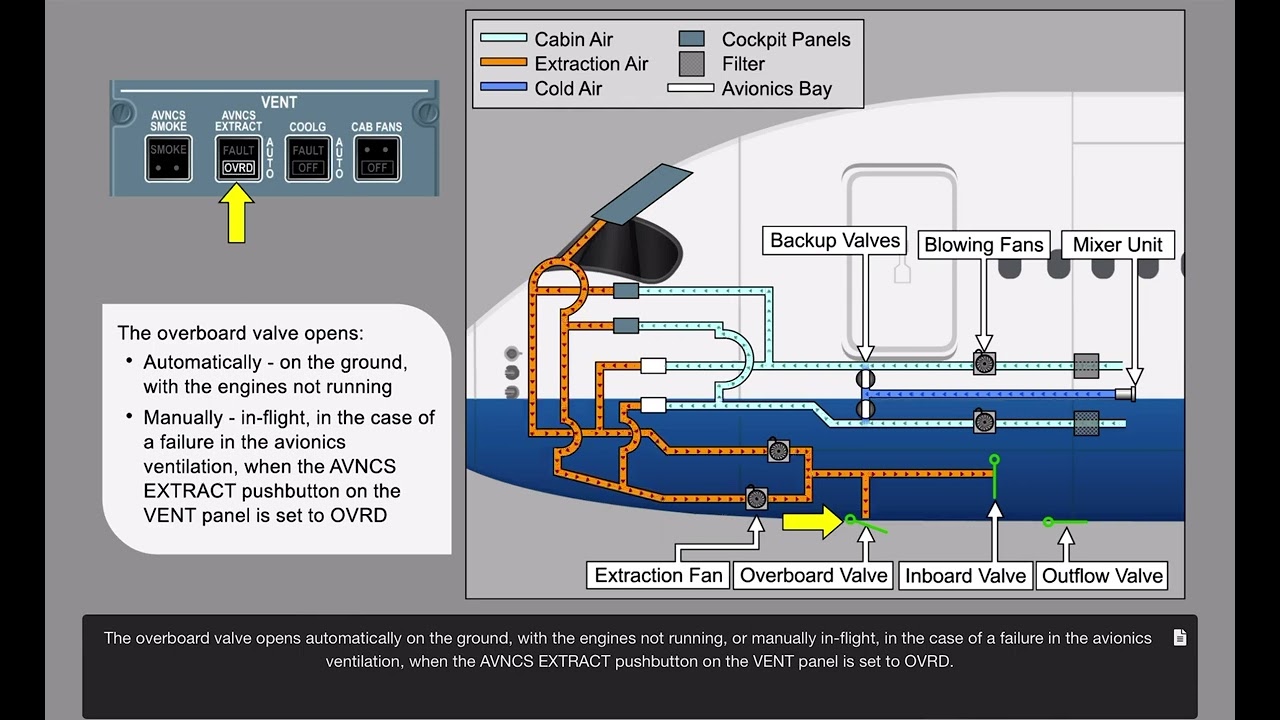
Supply fans move cooling air through equipment racks.
From a maintenance perspective, the useful question is not only whether the function is available, but whether the command, physical response and feedback agree. Configuration and effectivity must be confirmed before comparing the aircraft with training material.
3. Extraction fans
Extraction prevents heated air from recirculating into the same rack volume.
From a maintenance perspective, the useful question is not only whether the function is available, but whether the command, physical response and feedback agree. Configuration and effectivity must be confirmed before comparing the aircraft with training material.
4. Duct modes
Air can be recirculated or discharged depending on condition and configuration.
From a maintenance perspective, the useful question is not only whether the function is available, but whether the command, physical response and feedback agree. Configuration and effectivity must be confirmed before comparing the aircraft with training material.
5. Backup valve
Conditioned mixer air can protect equipment after normal fan failure.
From a maintenance perspective, the useful question is not only whether the function is available, but whether the command, physical response and feedback agree. Configuration and effectivity must be confirmed before comparing the aircraft with training material.
6. Mixer-temperature interaction
Backup cooling demand may lower common cabin supply temperature.
From a maintenance perspective, the useful question is not only whether the function is available, but whether the command, physical response and feedback agree. Configuration and effectivity must be confirmed before comparing the aircraft with training material.
7. Temperature monitoring
Rack sensors detect inadequate cooling before equipment damage.
From a maintenance perspective, the useful question is not only whether the function is available, but whether the command, physical response and feedback agree. Configuration and effectivity must be confirmed before comparing the aircraft with training material.
8. Fan-status limitations
A running fan does not prove clear airflow through racks.
From a maintenance perspective, the useful question is not only whether the function is available, but whether the command, physical response and feedback agree. Configuration and effectivity must be confirmed before comparing the aircraft with training material.
9. Blockage and contamination
Foreign objects, filters and loose insulation can restrict cooling.
From a maintenance perspective, the useful question is not only whether the function is available, but whether the command, physical response and feedback agree. Configuration and effectivity must be confirmed before comparing the aircraft with training material.
10. Maintenance sequence
Compare fan current, command, airflow, valve state and rack temperature.
From a maintenance perspective, the useful question is not only whether the function is available, but whether the command, physical response and feedback agree. Configuration and effectivity must be confirmed before comparing the aircraft with training material.
11. Scenario
High rack temperature with normal fan status points toward restriction, wrong airflow path or sensor issue.
From a maintenance perspective, the useful question is not only whether the function is available, but whether the command, physical response and feedback agree. Configuration and effectivity must be confirmed before comparing the aircraft with training material.
12. Restoration
Duct connections and rack seals must be restored exactly.
From a maintenance perspective, the useful question is not only whether the function is available, but whether the command, physical response and feedback agree. Configuration and effectivity must be confirmed before comparing the aircraft with training material.
Maintenance safety boundary
ATA 21 work can expose personnel to hot pneumatic air, residual pressure, rotating fans, electrical heaters, water contamination, refrigerant or coolant, confined spaces and unexpected automatic valve movement. Switch position alone is not proof of isolation. Establish the complete energy state, use current approved maintenance data, confirm depressurization, isolate all electrical and pneumatic sources, install required warning devices and restore every duct, clamp, seal, insulation blanket, drain and access panel before release to service.
End-of-lesson review
- Trace the energy and airflow path from source to final outlet.
- Identify the controller, actuator and feedback sensor for each major function.
- State what changes during a single failure and which backup path remains.
- Explain how a misleading indication could imitate a mechanical problem.
- List the physical restoration checks required after access.