Educational familiarization only. This original TechOpsBase lesson does not reproduce manufacturer pages, proprietary figures, maintenance procedures, numerical limits or controlled task data. Actual aircraft work requires current approved data, correct effectivity, operator procedures, authorization, safety controls and supervision.
Resource profile
- Aircraft: Airbus A350 family
- ATA: 49 - Airborne Auxiliary Power
- Audience: Enthusiasts, students, junior technicians and professionals
- Level: Intermediate-to-advanced
- Status: Draft pending technical review
Learning objectives
- Explain bidirectional start/generate torque.
- Identify gearbox-driven accessories.
- Recognize gear/bearing/seal symptoms.
- Connect oil debris to mechanical health.
- Diagnose no-crank and drag.
1. Purpose and system role
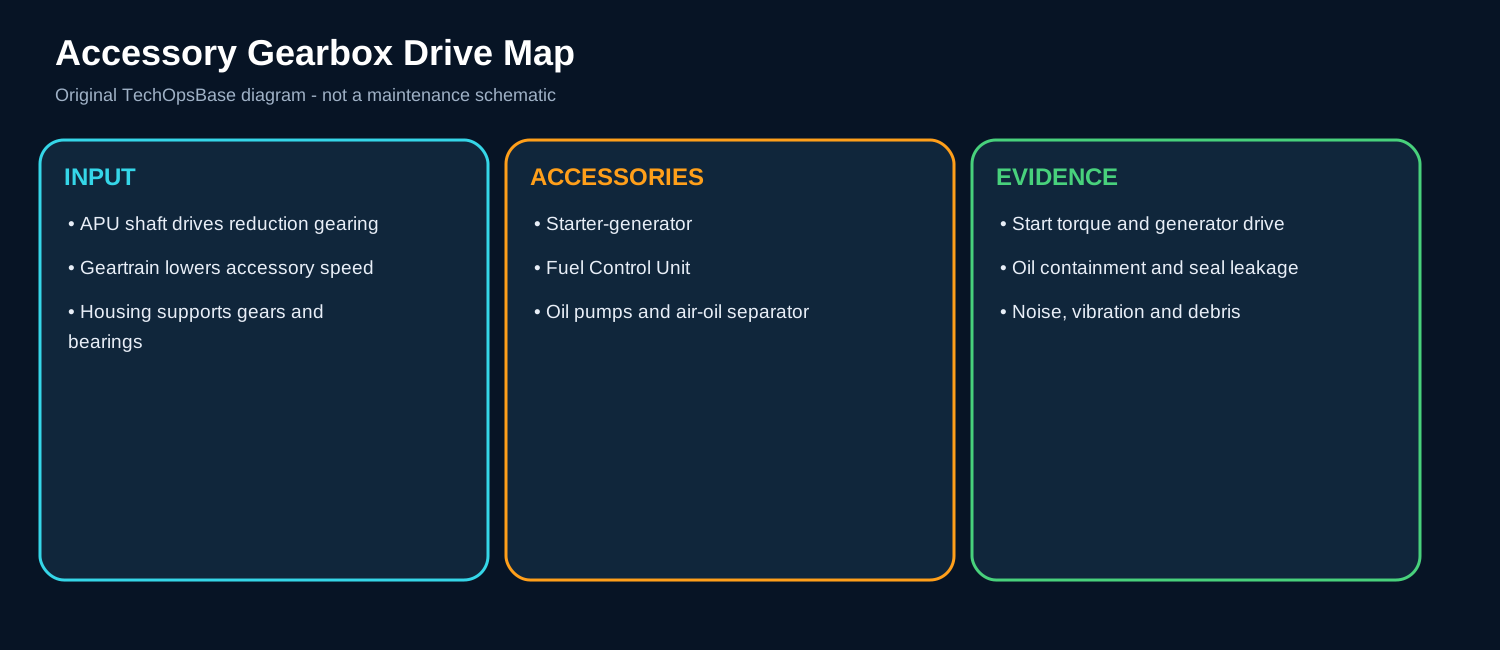
The gearbox reduces APU shaft speed and distributes torque to the starter-generator, fuel-control and lubrication accessories. It also contains oil around gears, bearings and seals.
2. Architecture and energy flow
During start, the starter-generator drives through the gearbox into the APU shaft.
During run, the power section drives the gearbox and accessories, including the starter-generator in generate mode.
Housing, bearings, gears and seals preserve alignment and oil containment.
3. Major components
Reduction geartrain. Transfers and reduces shaft speed. In normal service, the component must perform its role while the ECB or related aircraft system monitors command, feedback or the effect it produces. A defect may be electrical, mechanical, pneumatic, fuel-powered or caused by installation. Useful maintenance evidence includes gear noise, debris, backlash and seizure. The technician should separate the command path from the actual physical response before replacing the component.
Starter-generator drive. Carries start torque and generation torque. In normal service, the component must perform its role while the ECB or related aircraft system monitors command, feedback or the effect it produces. A defect may be electrical, mechanical, pneumatic, fuel-powered or caused by installation. Useful maintenance evidence includes start current, drive noise, output and spline condition. The technician should separate the command path from the actual physical response before replacing the component.
FCU drive. Provides mechanical input to fuel-control pumping. In normal service, the component must perform its role while the ECB or related aircraft system monitors command, feedback or the effect it produces. A defect may be electrical, mechanical, pneumatic, fuel-powered or caused by installation. Useful maintenance evidence includes fuel-pressure loss, shutdown and drive condition. The technician should separate the command path from the actual physical response before replacing the component.
Oil-pump drive. Maintains lubrication and scavenge flow. In normal service, the component must perform its role while the ECB or related aircraft system monitors command, feedback or the effect it produces. A defect may be electrical, mechanical, pneumatic, fuel-powered or caused by installation. Useful maintenance evidence includes oil pressure, debris and start protection. The technician should separate the command path from the actual physical response before replacing the component.
Housing/seals. Support alignment and contain oil. In normal service, the component must perform its role while the ECB or related aircraft system monitors command, feedback or the effect it produces. A defect may be electrical, mechanical, pneumatic, fuel-powered or caused by installation. Useful maintenance evidence includes cracks, external leakage, drain evidence and distorted interfaces. The technician should separate the command path from the actual physical response before replacing the component.
4. Normal operation
Step 1: Cranking
High motor torque passes through the geartrain.
Step 2: Acceleration
Torque direction transitions as combustion becomes self-sustaining.
Step 3: Generation
The APU drives the starter-generator and accessories continuously.
Step 4: Coast-down
Gear and bearing sound/drag can be observed as speed decays.
5. Control, monitoring and protection
The ECB/SGCU monitor electrical and speed behavior but cannot directly identify every gear/bearing defect.
Oil debris, vibration, current and sound are essential mechanical evidence.
6. Failure modes and maintenance reasoning
- Seizure: No crank or immediate high-current/slow rotation.
- Excess drag: Slow start, high EGT and abnormal current.
- Gear/bearing wear: Noise, vibration, debris and heat.
- Seal/housing leak: Oil loss, drain staining and contamination.
- Drive-interface fault: Starts but no generation, or loss of fuel/oil accessory drive.
7. Interfaces with other aircraft systems
- Starter-generator and SGCU.
- FCU and combustion fuel.
- Oil pumps and air-oil separator.
- Power-section shaft.
- Mount/vibration and drain system.
8. Practical scenarios
High start current with little rotation
Investigate starter-generator/gearbox/mechanical seizure.
Normal start but no generation
Separate electrical generate-mode control from mechanical drive.
Metal in filter plus vibration
Preserve debris and inspect gearbox/power-section bearings.
9. Technician takeaways
- Torque reverses after start.
- One gearbox fault can affect several systems.
- Do not clean debris before recording it.
- Verify oil service/priming after gearbox work.
Maintenance boundary
This resource teaches architecture, operating logic and troubleshooting reasoning. It excludes task steps, torque values, test limits, servicing quantities, start thresholds and dispatch decisions. The APU contains hot surfaces, rotating machinery, high-energy start circuits, pressurized fuel and oil, automatically moving components and fire-system interfaces. Use current approved AMM/TSM/WDM data and all required isolation procedures.
Review prompts
- What service should the subsystem provide?
- Which component creates the output and which component controls it?
- Which sensor or feedback proves the result?
- What is the command-versus-response evidence?
- Which ground/flight protection logic applies?
- Which other ATA system supplies or receives the command?
- What physical evidence should be preserved before reset?
- What heat, rotation, pressure, electrical or fire-boundary hazard remains?