Educational familiarization only. This TechOpsBase resource is an original learning transformation grounded in a privately supplied B737 MAX ATA 22 source. It does not reproduce manufacturer task steps, limits, figures or controlled maintenance instructions. Current approved data and aircraft effectivity control real work.
What this resource teaches
Understand the autothrottle as a controlled speed/thrust function with computation, actuator and sensor dependencies.
Autothrottle has its own BITE path
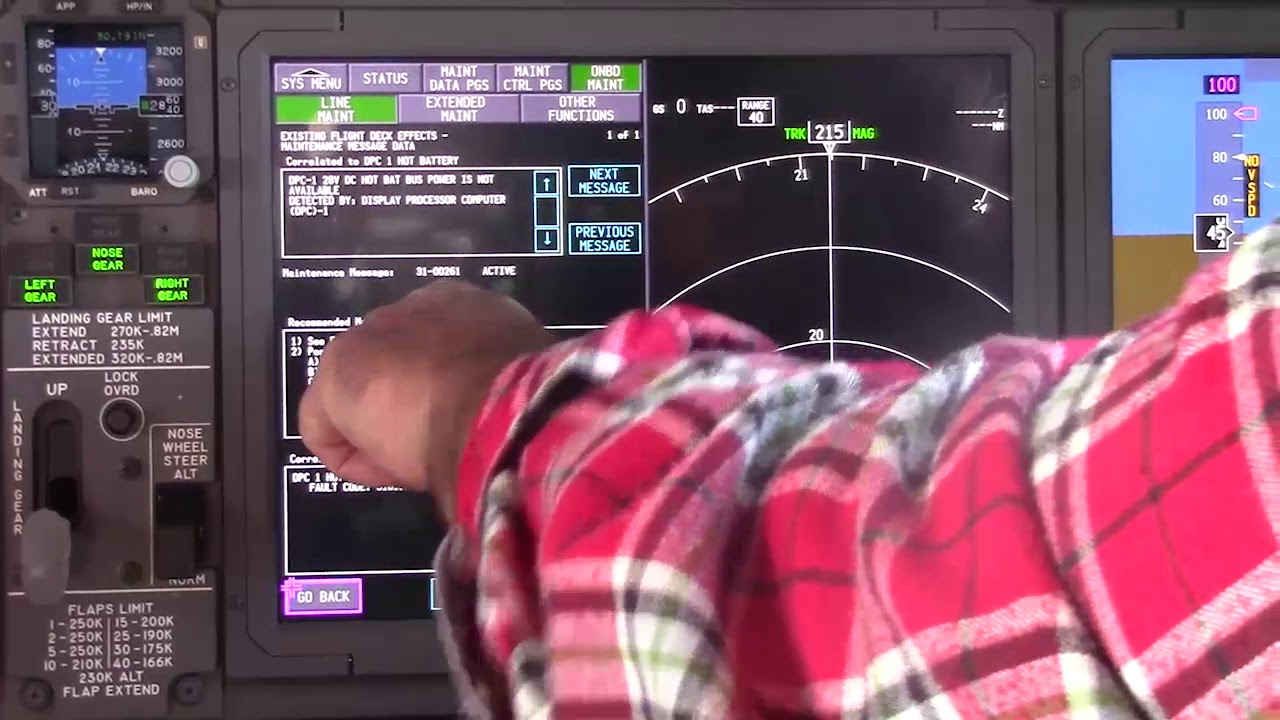
The chapter uses the FMC CDU to access autothrottle BITE and current-status/interactive tests. This shows that maintenance access and operational control are different interfaces into the same system.
Actuation is physical
The contents identify an autothrottle servo motor/gearbox and brake assembly. Therefore an autothrottle symptom can exist in command/computation, actuator mechanics or throttle-lever response.
Navigation/IRS data matters
The source requires aligned air-data/inertial reference information for autothrottle tests. This is a clear ATA 22 ? ATA 34 dependency.
Warnings/status are downstream evidence
Autothrottle warning lights and BITE messages represent processed system states. They should be combined with physical response and interface data before forming a maintenance hypothesis.
Do not turn BITE into guesswork
BITE can identify suspect LRUs and interfaces, but the source explicitly directs maintenance to the interactive fault-isolation manual for the approved next steps.
Put this topic into the wider system
Command, mode and response are separate
A pilot selection is an input; an armed/active mode is the computed system state; aircraft/control-surface response is the physical output. Troubleshooting improves when these are logged separately rather than summarized as “autopilot did not work.”
Redundant channels provide comparison
FCC A/B and their BITE channels give maintenance a way to compare independent processing paths. A channel-specific event is different from a symptom common to both channels, which may point toward shared inputs, power, control authority or downstream interfaces.
Deeper system reasoning
Autoflight depends on navigation and hydraulic/electrical foundations
The source cross-references IRS/ADIRS alignment for autothrottle and relies on aircraft power, sensors and control authority. ATA 22 therefore cannot be understood as software alone. Valid air-data/inertial inputs, electrical supply, hydraulic/control-surface capability and correctly configured panels all sit underneath the mode logic. When multiple autoflight functions fail together, search for shared prerequisites before assuming several independent computers failed.
Technician evidence matrix
Record selected/armed/active modes, FCC channel, required sensor/navigation inputs, downstream control authority, physical response and BITE current/history evidence.
Before using a maintenance message as a conclusion, note what independent evidence agrees with it and what evidence does not. If an alternate source, channel or display changes the symptom, record that explicitly because it can separate a common path from a source-specific path. Preserve configuration and event conditions in the handover so the next technician does not have to rebuild the diagnostic context from memory.
Evidence-first study method
For any system complaint, separate source/input, control logic, physical response, sensing/indication and consumer/result. When two layers disagree, that disagreement is useful evidence. Do not turn that evidence into a maintenance action until the applicable approved fault-isolation or maintenance data is open.
Approved-data boundary
Educational system explanation only. Do not use this page to perform maintenance, operate aircraft systems, isolate components or determine dispatch status. Current approved maintenance data, aircraft effectivity and operator procedures control real aircraft work.