Educational familiarization only. This original TechOpsBase lesson does not reproduce manufacturer pages, proprietary figures, maintenance procedures, numerical limits or controlled task data. Actual aircraft work requires current approved data, correct effectivity, operator procedures, authorization, safety controls and supervision.
Resource profile
- Aircraft: Airbus A350 family
- ATA: 49 - Airborne Auxiliary Power
- Audience: Enthusiasts, students, junior technicians and professionals
- Level: Intermediate-to-advanced
- Status: Draft pending technical review
Learning objectives
- Explain fire containment.
- Inspect seals/blankets.
- Recognize heat and fluid damage.
- Restore doors and penetrations.
1. Purpose and system role
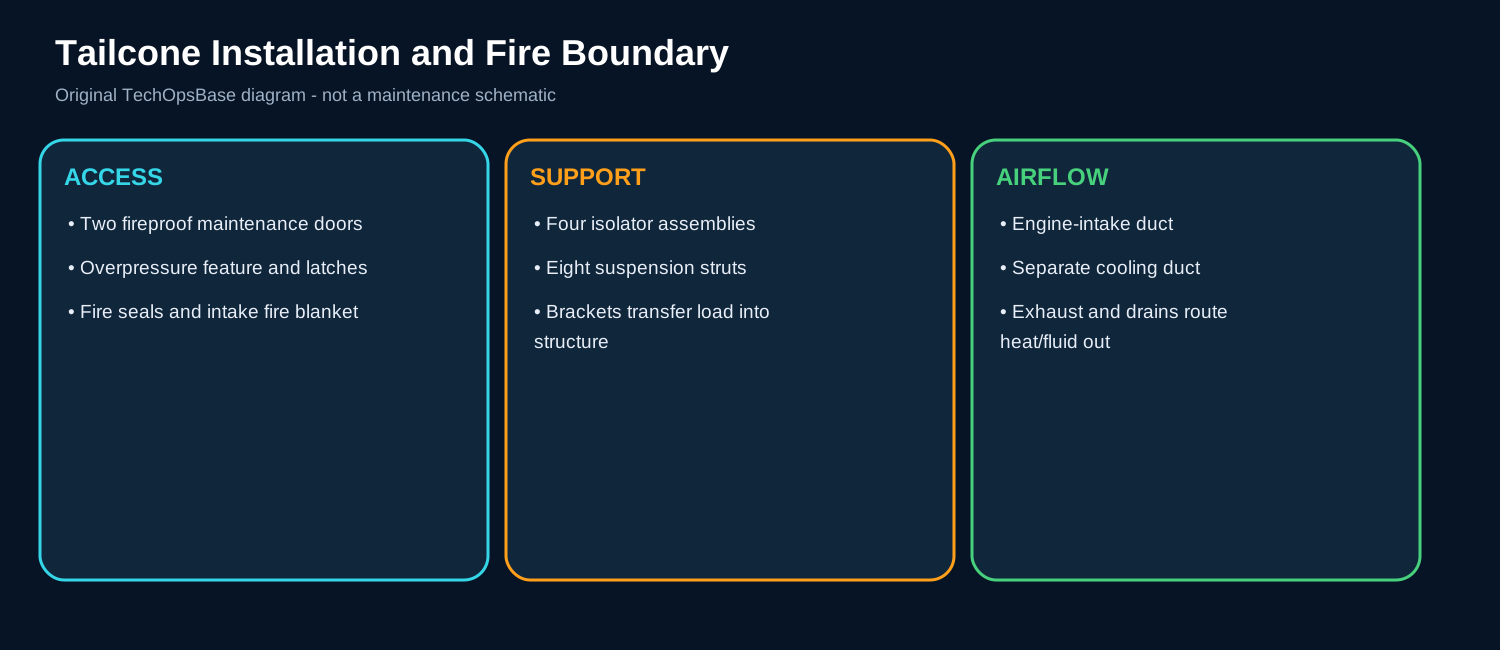
Fire seals, walls, doors and the intake blanket contain flame and hot gas around a tailcone gas turbine. They can fail without any operational warning.
2. Architecture and energy flow
The boundary includes rigid walls and flexible seals at moving or removable interfaces.
Thermal growth, vibration, door movement and duct work continually load the materials.
A new seal cannot compensate for a distorted flange or incorrect latch pattern.
3. Major components
Door perimeter seals. Seal access doors. In normal service, the component must perform its role while the ECB or related aircraft system monitors command, feedback or the effect it produces. A defect may be electrical, mechanical, pneumatic, fuel-powered or caused by installation. Useful maintenance evidence includes compression, tears, hardness and gaps. The technician should separate the command path from the actual physical response before replacing the component.
Intake fire blanket. Closes irregular intake boundary. In normal service, the component must perform its role while the ECB or related aircraft system monitors command, feedback or the effect it produces. A defect may be electrical, mechanical, pneumatic, fuel-powered or caused by installation. Useful maintenance evidence includes chafing, overlap, fasteners and fluid saturation. The technician should separate the command path from the actual physical response before replacing the component.
Exhaust forward seal. Allows movement while completing boundary. In normal service, the component must perform its role while the ECB or related aircraft system monitors command, feedback or the effect it produces. A defect may be electrical, mechanical, pneumatic, fuel-powered or caused by installation. Useful maintenance evidence includes heat marks, compression and retainer condition. The technician should separate the command path from the actual physical response before replacing the component.
Firewall penetrations. Seal lines/wiring/ducts. In normal service, the component must perform its role while the ECB or related aircraft system monitors command, feedback or the effect it produces. A defect may be electrical, mechanical, pneumatic, fuel-powered or caused by installation. Useful maintenance evidence includes missing sealant, gaps and disturbed fittings. The technician should separate the command path from the actual physical response before replacing the component.
4. Normal operation
Step 1: Closed/latched
The complete boundary depends on correct door and seal engagement.
Step 2: APU operation
Heat, pressure and vibration challenge the boundary.
Step 3: Maintenance
Every disturbed interface is inspected before closure.
5. Control, monitoring and protection
No electronic sensor directly proves seal integrity.
Exhaust and drain faults can damage the boundary.
6. Failure modes and maintenance reasoning
- Hard/torn seal: Loss of fire containment.
- Fluid-soaked blanket: Material degradation and increased fire risk.
- Door distortion: Uneven compression and gaps.
- Missing/incorrect fastener: Blanket or seal movement.
7. Interfaces with other aircraft systems
- APU doors and structure.
- Air intake and exhaust.
- Drains and fluid leakage.
- ATA 26 fire protection.
8. Practical scenarios
Heat mark at penetration
Inspect nearby exhaust, blanket, seal and structure.
Seal repeatedly displaced
Check mating surface and door/latch alignment.
9. Technician takeaways
- Inspect the mating surface.
- Compare full perimeter compression.
- Use correct effectivity/orientation.
- No warning does not mean serviceable.
Maintenance boundary
This resource teaches architecture, operating logic and troubleshooting reasoning. It excludes task steps, torque values, test limits, servicing quantities, start thresholds and dispatch decisions. The APU contains hot surfaces, rotating machinery, high-energy start circuits, pressurized fuel and oil, automatically moving components and fire-system interfaces. Use current approved AMM/TSM/WDM data and all required isolation procedures.
Review prompts
- What service should the subsystem provide?
- Which component creates the output and which component controls it?
- Which sensor or feedback proves the result?
- What is the command-versus-response evidence?
- Which ground/flight protection logic applies?
- Which other ATA system supplies or receives the command?
- What physical evidence should be preserved before reset?
- What heat, rotation, pressure, electrical or fire-boundary hazard remains?